“The best way to build the future is to create it.” — Peter F. Drucker
Marketing 1on1 helps businesses win nearby searches with practical SEO and paid ad work. This guide shows how a focused strategy drives more calls, bookings, and direction requests — not surface-level metrics.
The agency offers three straightforward packages: Starter, Business, and Ultimate. Every plan comes with no contracts and no sign-up fees, with core deliverables tuned for neighborhood campaigns.
Readers receive a current how-to to improve internet marketing consultant Austin performance across the US. Topics include building a local foundation, improving Google Maps presence, on-site SEO, geo-targeted ads, and using reviews and social channels to build trust.
The framework is simple: win nearby high-intent searchers first, then scale using paid and social channels. Marketing 1on1 serves as the hands-on implementation partner for businesses that want steady visibility and more qualified leads through repeatable processes.
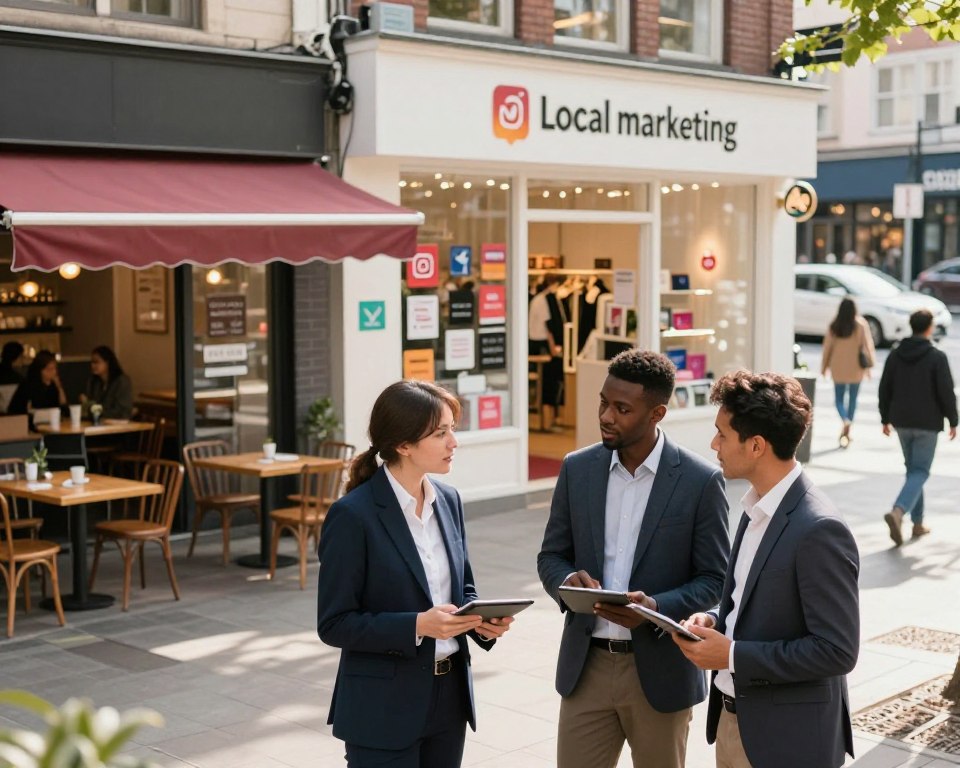
What local online marketing means for US businesses today
For businesses in the US, reaching nearby customers means combining intent-driven search with trusted reputation signals.
Digital vs traditional tactics and when each wins
As part of digital marketing, this approach targets customers who can visit, call, or book right now.
Traditional channels—flyers, radio spots, and events—can still outperform for some demographics and urgent promotions. In tight-knit neighborhoods, a timely event or community notice can bring immediate foot traffic.
Digital tactics win on targeting and measurability, letting businesses scale spend and prove ROI quickly.
Core channels that generate nearby demand
- Search engines capture intent when people need services immediately.
- Social media builds community trust and keeps the brand top-of-mind.
- Geo-targeted ads deliver immediate reach to the right neighborhoods.
- Reviews act as local proof and lower perceived risk for prospects.
An integrated approach prevents silos: ad copy and social posts support search visibility and improve conversion rates. A simple mental model helps US businesses: “Be found (search), be trusted (reviews), be chosen (landing pages), be remembered (social/email).”
Why local intent is the opportunity you can’t ignore right now
Search queries with geographic intent convert casual browsers into immediate customers.
Measure the scale: 46% of Google searches show local intent. That means nearly half of search activity already looks for nearby solutions, not discovery. Local SEO is a primary lever for capturing existing demand instead of inventing it.
High-intent behavior and trust signals
People who search with place-based terms often call, request directions, or book same-day service. Those actions tend to convert at higher rates than general queries.
Reviews matter a lot: 75% of consumers regularly read online reviews when evaluating businesses. Strong online reviews shift both click choice and conversion decisions.
“Visibility without trust drops clicks; trust without visibility drops customers.”
| Metric | What it means | Business outcome |
|---|---|---|
| 46% searches | Existing local demand | Higher call & booking volume |
| 75% review reading | Trust drives selection | Higher click-through and conversions |
| Competitive gap | Hidden listings lose demand | Competitors win customers |
The best tactics align intent (search queries) with proof (reviews, photos, local references) plus a clear next step: call or book. Improving results requires both ranking work and conversion optimization to turn visibility into revenue.
Define your local audience and service area before spending a dollar
Defining your target customers and service area turns guesswork into measurable results. This step prevents wasted spend across SEO, Google Ads, and social campaigns by focusing on high-probability buyers.
Create an ideal customer profile with simple research
Use brief checkout surveys and 15-minute interviews with your best customers. Look for patterns by neighborhood, need, and urgency.
In small businesses, talk to staff and review past bookings to find who converts most. Translate those insights into clear messaging about price sensitivity and trust needs.
Choose radius, neighborhoods, and the “near me” intent to win
Choose a service radius based on drive time, staffing, and capacity. Focus on neighborhoods where customers already come from.
“”Near me” searches show urgency and proximity; deciding where to win consistently helps prioritize ad spend and search focus.
Pick primary conversions and document priorities first
Set calls, form fills, bookings, or direction requests as primary goals. For many local business owners, click-to-call and directions are more valuable than raw traffic.
“Document conversions before launch so analytics and landing pages line up from day one.”
| Focus | Action | Why it matters |
|---|---|---|
| ICP | Surveys & interviews | Focuses on the right customers |
| Service area | Neighborhoods & radius | Limits wasted reach |
| Conversions | Calls, bookings, and directions | Tracks revenue impact |
Marketing 1on1 uses this process to target cities, prioritize measurable conversions, and tie local efforts to real outcomes. Documenting priorities makes it easy to track performance from day one.
Set up your local foundation: NAP consistency, tracking, and website basics
Start with the fundamentals: exact business details and strong tracking turn clicks into calls.
Make your phone number, address, and business name match everywhere
Consistent NAP (name, address, phone number) signals trust to search engines and stops customer confusion.
Mismatch listings can suppress visibility in search results and generate wrong-number or wrong-address complaints.
Ensure NAP is identical on the website header and footer, Google Business Profile, key directories, social profiles, and industry platforms.
Install analytics and call tracking to tie marketing to revenue
Use GA4 and Google Search Console to track site visits and organic behavior. Add conversion events for form fills and bookings.
Use dynamic call tracking so phone leads connect back to ads and campaigns. This helps attribute revenue to the right channel.
Marketing 1on1 audits and fixes these foundations: matching business details, tracking readiness, and basic site signals that improve ranking and conversion.
- Build a simple reporting rhythm: weekly checks and monthly reviews.
- Tie form fills, bookings, and calls to source/medium using UTM parameters.
- Improvements compound: stronger NAP and tracking reduce friction across every channel and protect online reputation.
Create and optimize your Google Business Profile for stronger Google Maps visibility
A complete Google Business Profile is often the fastest route to higher placement in Google Maps, the knowledge panel, and the local pack. Small profile updates can turn map views into calls, direction requests, and bookings.
Complete every field that influences rankings and clicks
Fill in primary category, secondary categories, services, service area, and a clear description. Add regular hours and holiday hours. Enable appointment links and key attributes.
Add photos, services, categories, hours, and messaging to create fast trust
Photos of the storefront, team, and recent work reduce uncertainty and raise click-through rates. Messaging and click-to-call speed conversions for mobile-first customers.
Use posts, offers, and updates to remain active in search results
Post weekly updates or offers to signal freshness to search engines and give customers reasons to choose now. Short, timely posts encourage immediate action.
How the knowledge panel and local pack help customers decide
Customers often follow a clear path: query → local pack → scan profile (photos, reviews, hours) → call/directions/booking. Optimizing each field improves placement and conversion at every step.
| Element | Why it matters | Quick action |
|---|---|---|
| Primary & Secondary Categories | Influences which searches trigger your profile | Pick precise industry categories |
| Photos & Services | Reduces uncertainty and improves clicks | Upload 10+ high-quality photos; list services |
| Hours & Booking Links | Sets expectations and makes conversion easier | Add regular and holiday hours plus appointment URLs |
| Reviews & Responses | Recent reviews and replies boost trust and visibility | Ask for reviews; reply within 48 hours |
“Complete profiles appear more often and convert better in map results.”
Optimize your website for local SEO with on-page and technical steps
When a website speaks the language of neighborhoods, it ranks and converts better. This section outlines practical on-page steps and technical checks that turn visibility into calls and bookings.
Use location-based keywords without keyword stuffing
Use a location phrase once in the title tag and meta description. Include the city or neighborhood in an H1 or H2, and repeat it naturally in the body. Use variations such as “best pizza in Chicago” and related terms to match search intent.
Create unique location pages
Build these pages if you serve multiple service areas or nearby cities. Each page should include local proof, service details, testimonials from that area, and unique photos. Avoid duplicating the same template text across pages.
- Local proof examples: storefront photos, landmarks, neighborhood names, and community events.
- Technical must-haves: crawlability, internal links to service/location pages, mobile speed, and Core Web Vitals.
“Technical issues can prevent indexing or reduce engagement, even when content is strong.”
Marketing 1on1 packages include keyword research & analysis, along with on-page SEO. When a site is aligned by location and technically ready, search engine placement improves and search results produce more qualified calls and bookings.
Build local landing pages that convert traffic into calls and bookings
High-intent visitors need a short path from search to call — landing pages deliver it. A focused page is a single-goal destination designed to turn clicks into phone leads, bookings, or directions for nearby customers.
What makes these pages distinct
These pages minimise distraction. They keep navigation minimal, present a clear offer, and maintain strong location relevance. That contrasts with general website pages, which often try to serve many goals at once.
Elements that convert
- Embedded map — helps visitors confirm proximity and request directions quickly.
- Click-to-call buttons and sticky CTAs — reduce steps for mobile customers.
- Booking calendar or short form — captures appointments with minimal friction.
- Short local proof blocks — testimonials, photos, or nearby landmarks create fast trust.
Align ads and measure results
Align headlines and service language with geo-targeted ads and Google Ads to reduce bounce rates. Build separate pages for different neighborhoods when running segmented ad groups.
Keep mobile forms brief, add sticky call actions, and track conversions per page and campaign. This approach helps improve local visibility and makes it easy for potential customers to convert.
Manage online reviews to strengthen your online reputation
Managing reviews should be an operational habit, not an occasional task. A consistent process increases visibility and helps build trust with future buyers.
How to ask for and collect feedback
Volume, quality, and recency of feedback all influence conversions and search placement. Recent positive reviews signal relevance to search engines and boost customer confidence.
- Ask right after service: post-service SMS, a next-day email, or a QR code on receipts.
- Use direct review links to reduce friction and increase how many customers leave comments.
- Polite follow-ups for non-responders—one reminder after three days—raise response rates without becoming annoying.
Responding to reviews publicly
Responses show prospective buyers that the business cares and resolve issues in public view.
- Positive reviews: thank the reviewer, mention a specific detail, and invite them back.
- Negative reviews: acknowledge the concern, clarify facts, offer a solution offline, and stay professional.
Where review activity matters most
Prioritize Google for broad discovery and Yelp for many service categories. Industry-specific platforms matter for niche sectors and trade channels.
“Reputation is a measurable asset: steady review management lifts both organic results and paid conversion rates.”
Marketing 1on1 treats review collection as a repeatable process. Encourage customers with clear prompts, track responses, and keep brand voice consistent across media to protect and grow a business’s online reputation.
Run geo-targeted Google Ads and PPC for high-intent local leads
Geo-targeted pay-per-click campaigns put a business in front of nearby customers who are ready to act. This channel works fastest for urgent services and competitive categories where organic search needs time to rank.
Targeting by city, ZIP, neighborhood, and radius settings
Advertisers can segment by city and ZIP, target neighborhoods, or set a radius around a storefront or service hub. Use layered settings: exclude areas you don’t serve and run ads during serviceable hours.
Choose urgency-driven keywords
Choose intent phrases such as “near me,” “open now,” and service + city combinations. Match types should be controlled to avoid broad queries that waste budget.
Raise Quality Score with focused relevance
Improve score by grouping tightly themed ad groups, writing location-specific ad copy, and sending clicks to landing pages made for that exact service and area. Higher relevance lowers cost per click and improves ad position.
Common PPC mistakes that waste spend
- Avoid overly broad match types that attract irrelevant traffic.
- Don’t send paid clicks to generic homepages; use focused landing pages instead.
- Add negative keywords and exclude out-of-area geographies.
- Turn off campaigns outside your service hours to prevent wasted clicks.
For phone-driven businesses, enable call extensions, call-only ads, and conversion tracking tied to calls. Optimize by lead quality, not just clicks—review actual bookings and call outcomes to refine bids and keywords.
Use social media marketing to connect with your local community
Sharing behind-the-scenes stories helps people connect with a brand before they buy. Social media builds familiarity and boosts branded searches, so posts should support visibility and trust that lead to calls and bookings.
Pick platforms by business type
Select channels that align with how people consume content. Facebook works for community updates and events. Instagram fits visual services, retail, and portfolio-style work.
YouTube is best for explainers, demos, and long-form proof. LinkedIn suits B2B services and professional buyers.
Shape content that resonates with people
- Behind-the-scenes operations and staff introductions build trust quickly.
- Customer stories and before-and-after examples demonstrate value.
- Event recaps and short video clips keep feeds fresh.
Use features that increase discovery
Add hashtags and geotags to reach nearby audiences. Use Stories and location tags to publish timely, high-engagement posts. Short reels and clips boost shareability and branded searches.
Engage with groups and respond quickly
Join community groups with a value-first approach: share tips, answer questions, and post helpful updates. Avoid hard selling to prevent spam perception.
Reply to comments and messages quickly. Fast replies act as trust signals and influence buying decisions.
“Consistent social activity keeps a business visible between purchases and boosts trust when people are ready to act.”
Use social media ads to reach nearby customers at scale
Paid social lets businesses reach a defined neighborhood with measurable results and predictable budgets. When paired with focused landing pages and tracking, social campaigns become a controllable scaling lever for city-targeted work.
Geo-targeted campaigns on Facebook and Instagram for local promotions
Organic posts build trust; paid social delivers predictable reach within a chosen radius, ZIP, or neighborhood. Target by city or radius, create ads with neighborhood cues, and send traffic to a conversion-optimized page.
Retarget website visitors and engaged followers for repeat business
Build retargeting lists from site visitors, video viewers, and people who engaged or clicked “Get Directions”. These segments usually convert at a lower cost and lift return visits.
| Element | Why it matters | Quick action |
|---|---|---|
| Location Targeting | Controls reach within your service area | Set radius and ZIP exclusions |
| Creative | Improves local relevance | Use neighborhood images and clear CTAs |
| Retargeting | Boosts ROI | Audience: site visitors, engagers, video viewers |
Track calls, bookings, and form submissions so ad spend maps to revenue. Rotate creative and limit frequency to avoid fatigue in small markets. Align offers with local events and seasonal demand to improve response rates.
“Conversions show which ads bring customers, not just clicks.”
Use email marketing and SMS to keep local customers coming back
Keeping customers engaged after the first visit multiplies the return on acquisition spend. Email and short text messages are cost-efficient retention channels that complement Marketing 1on1’s visibility work.
Grow a list in-store and on the website with simple incentives
Build lists where customers already interact: at the register, via booking forms, and with website pop-ups. Use a clear opt-in checkbox on appointment or checkout pages to capture consent.
- In-store sign-up: a tablet or card offering a first-time discount or priority scheduling.
- Website forms/pop-ups: short form, promise of exclusive offers or appointment access.
- Booking checkbox: include an opt-in for updates and seasonal offers at checkout.
Segment by area and link offers to community events and seasons
Segment your list by city, neighborhood, or service radius to keep messages relevant and reduce unsubscribes. Tailored promotions increase response rates and protect margins.
Examples: summer service bundles during festivals, holiday gift-card offers timed to community markets, or back-to-school specials for nearby neighborhoods.
For SMS, keep messages short, get explicit opt-in, include easy opt-out, and use urgency—appointment reminders or same-day offers only. These retention tactics increase lifetime value and stabilise revenue beyond initial campaigns, making acquisition spend work harder.
Earn local backlinks and listings to improve local search rankings
Earning credible backlinks and accurate citations helps businesses appear more trustworthy to search engines and customers.
Backlinks from chambers, partner sites, and reputable community pages serve as credibility signals. They tell search engines the business is established and relevant. Consistent citations—exact name, address, and phone—reduce confusion for both people and algorithms.
Get listed where customers actually search
Prioritise directories and industry platforms your customers actually use. Begin with chamber of commerce pages, top niche directories, and trusted local publications.
Simple local link-building ideas
- Join the chamber of commerce and ask for a member listing on their website.
- Request vendor or partner pages that link back to your website.
- Sponsor community events or small nonprofits and earn a sponsor link.
- Pitch stories to local publications and trade sites for editorial links.
Quality checks and consistency process
Assess links for domain authority, relevance, and editorial context. Avoid low-value directories that spam content or sell bulk links—those can create risk.
Do a quarterly consistency check. Confirm hours, address, and phone match across the most used profiles. Fix duplicates and update moved addresses quickly to prevent ranking drops and customer confusion.
“Authority work compounds: steady, quality links reduce reliance on paid ads and produce more stable rankings over time.”
Marketing 1on1 focuses on bespoke link-building and citation audits so businesses gain durable local visibility and avoid penalties from inconsistent listings.
Show up offline to win online through local events, partnerships, and influencers
Real-world gatherings create stories that make a brand memorable. Organizing local events and building partnerships turns trust into content. That content then feeds social feeds, backlinks, and press coverage that lift visibility for Marketing 1on1 clients.
Sponsor or host events and make them easy to share
Run workshops, pop-ups, sponsored booths, charity drives, or in-store classes. These neighborhood events create photos, short videos, and testimonials that amplify reach on social media and in local media.
Partner with complementary businesses
Referral exchanges, joint discounts, bundled services, and co-hosted events share costs and audiences. Partnerships help businesses cross-promote and connect local audiences to relevant offers.
Work with local influencers for authentic reach
Micro-influencers deliver higher trust with community followers. Select creators by audience fit, credibility, content quality, and clear disclosures. Track results with unique codes, dedicated landing pages, or call tracking numbers.
| Action | Why it works | How to measure |
|---|---|---|
| Run a workshop | Creates teachable media and testimonials | Sign-ups, video views, promo code usage |
| Co-host an event with a partner | Expands audience and drives referrals | Referral traffic, shared bookings, mentions |
| Micro-influencer content | Authentic endorsements for community people | Engagement, tracked codes, landing page traffic |
“Offline activity acts as a trust engine that fuels repeatable digital signals.”
Improve mobile experience and communication channels for more conversions
Mobile visits often convert intent into action; a fast, clear experience makes customers call or book.
Mobile-friendly design for “on-the-go” search
Speed and clarity matter because many searches happen while people are out and about. Slow pages or small buttons cause drop-off. Ensure the mobile website loads fast and shows the key service and location immediately.
Make it easy to contact you: click-to-call, forms, Messenger, and text
Place a click-to-call button above the fold and repeat it on landing pages. Keep forms to three fields or fewer for easy conversions on phones.
- Fast loading — under three seconds
- Readable type and buttons designed for tapping
- Few pop-ups and clear service-area wording
- Brief forms and clear click-to-call
| Element | Why it matters | Expected lift |
|---|---|---|
| Click-to-call | Makes calling one tap | More call conversions |
| Short form | Reduces friction | Higher bookings |
| Messenger / SMS | Preferred by some people | Faster responses, fewer missed leads |
Choose Messenger when customers expect fast chat; use SMS for appointment reminders and urgent responses. Operational readiness matters: set response-time standards and simple scripts so staff reply fast and consistently.
Faster replies protect reputation and convert more traffic into real bookings. Improved communication supports Marketing 1on1’s ranking and traffic gains by turning visibility into measurable outcomes.
How Marketing 1on1 SEO packages support local online marketing growth
Marketing 1on1 offers three tiered SEO packages designed to match effort to competition. Each plan blends technical fixes, page-level work, and profile alignment to improve search results and generate calls or bookings.
Starter SEO Package — fast traction
Best for low-competition keywords. Includes a comprehensive SEO audit, keyword research & analysis, on-page SEO, and custom link building. No contracts and no sign up fees.
A maximum of 3 targeted cities, algorithmic and manual penalty identification, plus a ranking improvements guarantee.
Business SEO Package — stable scaling
Designed for medium-to-low competition keywords. The same core deliverables as Starter, with sustained on-page work and authority building. No contracts and no sign up fees.
Includes penalty checks, targeted-city focus, and a ranking improvements guarantee so the business can measure progress.
Ultimate SEO Package — strong growth
Built for high-competition keywords. Adds deeper technical audits, stronger custom link campaigns, and ongoing brand strategy. No contracts and no sign-up fees. This plan focuses on durable authority for lasting gains.
What’s included across packages: a full SEO audit to find blockers, targeted keywords to capture demand, on-page optimization, Google Business Profile alignment, and coordination with Google Maps signals. Penalty protection reduces risk when building authority and scaling content. Pricing is transparent, and guarantees are provided where offered to ensure accountability for results-driven marketing.
Conclusion and next steps
A clear, repeatable process turns visibility into steady calls, bookings, and foot traffic.
This guide covered foundation and tracking, Google Business Profile optimization, website and location pages, conversion-focused landing pages, reviews, paid ads, social, and retention work. Consistent execution of these elements creates measurable improvements in visibility and trust.
Next steps: confirm your NAP, complete the GBP, publish or refine location pages, enable conversion tracking, and start a simple review request workflow. Treat reputation and quick responses as daily habits because they directly affect conversion rates and reviews.
Marketing 1on1 offers Starter, Business, and Ultimate packages with no contracts or sign up fees. Select the tier based on keyword competition, how quickly you need traction, and the scale of your visibility goals—then commit to steady optimization and measurement.
Company Name: Digital Marketing 1on1 SEO
Website: https://www.marketing1on1.com/SEO-company-austin/
Address: 203 W 10th St, Austin, TX 78701
Phone: (818) 538-4805